• ABOUT
    • About Us
    • Administrative & operational staff
    • Researchers
    • Cooperations
    • Our Partners
  • Centers and Institutes
    • Arid+​
    • Desert Floods Research Center
    • Skin Research Institute & Research Services Unit
    • LTER
  • Study Fields
  • Articles
    • Researchers Articles
  • EDUCATION
    • International Courses
    • JOURNAL
      • Early View
      • Send a research
      • Submit a Manuscript
  • CONTACT
  • עברית
  • ABOUT
    • About Us
    • Administrative & operational staff
    • Researchers
    • Cooperations
    • Our Partners
  • Centers and Institutes
    • Arid+​
    • Desert Floods Research Center
    • Skin Research Institute & Research Services Unit
    • LTER
  • Study Fields
  • Articles
    • Researchers Articles
  • EDUCATION
    • International Courses
    • JOURNAL
      • Early View
      • Send a research
      • Submit a Manuscript
  • CONTACT
  • עברית
logo
Summary of the IMPART Research Project and Symposium, 2014-2016; Integrating the public-private sectors for successful planning, conservation and management of rock art tourism development in the Negev, Dr. Joshua Schmidt
Home » NEWS & MEDIA

The bi-national (Israel-Italy) research project entitled “Integrative Multilateral Planning to Advance Rock Art Tourism” (IMPART) was jointly funded by the Israeli Ministry of Science, Technology and Space and the Italian Ministry of Foreign Affairs and combined researchers from the Dead Sea and Arava Science Center, the Israel Antiquities Authority, the Department of Hotel and Tourism Management, Ben-Gurion University and the Higher Institute on Territorial Systems for Innovation (SiTI), in Torino, Italy. IMPART focused on the urgent need to establish an interdisciplinary management plan to ensure the future protection and conservation of Negev rock art, a unique and vulnerable cultural heritage resource which currently is being threatened by an exponential increase in public interest and aggressive plans to develop the region for tourism.

Negev rock art hunting scene involving a dog and ibex

Coordinated by Dr. Joshua Schmidt from the Dead Sea and Arava Science Center, the IMPART study involved two concurrent streams of research: archeological and socio-touristic. Over the course of the two-year study, the archaeology unit conducted in-situ fieldwork in Har Hanegev and used digital mapping technologies to survey rock art located at Ramat Matred. The results from this survey, which included both rock art and other archaeological remains, enabled the researchers to establish a baseline for contextualizing forthcoming conservation-cum-development efforts for Negev rock art.
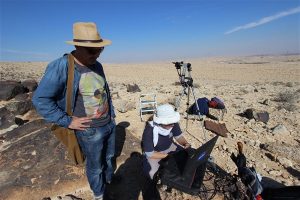
IMPART researchers Professor Natan Uriely, from the Department of Hotel and Tourism Management, Ben-Gurion University and Dr. Davida Eisenberg-Degen from the Israel Antiquities Authority, conducting Reflectance Transformation Imaging (RTI) within the context of IMPART fieldwork in the Negev Highlands, March, 2014

At the same time, in conjunction with their Italian partners, the socio-tourism unit combined theoretical research on rock-art conservation and tourism development with applied ethnographic fieldwork to ascertain a ‘best practices’ benchmark for the development of rock art tourism in Har Hanegev. To this aim, the researchers gathered extensive ethnographic data through Key Informant Interviews (KII) and a series of questionnaires disseminated among central stakeholder-informants from the public and private sectors as well as national and international tourists.

IMPART research assistants conducting fieldwork, Ramat Matred, Negev Highlands

In December 2016, the IMPART team held a dissemination seminar in Mitzpe Ramon, entitled “Integrating the public-private sectors for successful planning, conservation and management of rock art tourism development in the Negev”. The aim of the symposium was to present to various professionals in the public and private sector the principal findings and research results from the IMPART study and then discuss ways for integrating the diverse parties in the future planning, conservation and management initiatives for the development of rock art tourism in the Negev. The symposium was open to the public and included invited attendees from the Israeli Ministry of Science, the Embassy of Italy, academics and international experts in rock art as well as representatives from the Israeli Antiquities Authority, the Ramat Negev Regional Council, the Mitzpe Ramon local municipality, the Israel Government Tourism Corporation,  the Har Hanegev Tourism Board, the Authority for the Development and Settlement of the Bedouin in the Negev, the National Parks Authority and a host of regional tourism operators, some of whom had previously participated in the study as informants and interviewees.

Dr. Stefano Boccaletti, Scientific Attaché at the Italian Embassy of Israel, delivering opening remarks at the IMPART symposium, Mitzpe Ramon, December, 2016.

Sara Levi-Sacerdotti, the head of the Italian IMPART team, discusses analytical methodologies during the IMPART symposium, Mitzpe Ramon, December, 2016. 
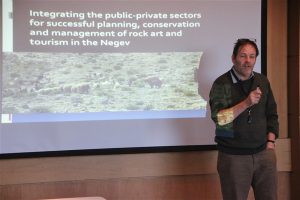
International rock art expert, George Nash, presents a lecture on devising rock art management plans at the IMPART dissemination symposium, Mitzpe Ramon, December, 2016.

The academic forum and panel debate were preceded by a field-outing to the Ramat Matred rock art site where IMPART archaeologists gave a tour of the survey area and explained their main findings and the key insights that emerged from their fieldwork. Afterwards, the symposium participants reconvened in Mitzpe Ramon for lunch and participated in two seminar sessions. In the first, the IMPART team presented their findings relating to the overall thesis question ‘should we and how can we conserve and develop rock art in the Negev?’. The second session consisted of a panel discussion. The panel delegates, local stakeholders and Negev rock art experts, were asked to relate to their vision for the conservation of Negev rock art versus its development; the current stance and potential future role for the authority that they represent regarding management and development of rock art in the Negev; how specifically could their organization contribute to the success of this undertaking; and if, in fact, they thought there was a need for another rock art park beyond what is currently being developed in the Negev.
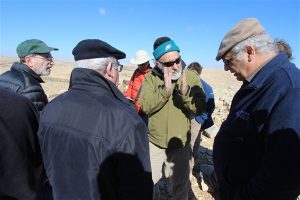
During the IMPART symposium field outing, Professor Steve Rosen, from the Department of Bible, Archaeology and Ancient Near Eastern Cultures, Ben-Gurion University, debates rock art interprepation with tour guide and rock art enthusiast, Yehuda Rotblum, artist Itzu Remer and the IMPART ecologist, Dr. Ron Frumkin, Ramat Matred, December, 2016.

Taking into consideration the opinions, comments and analytical remarks voiced during the symposium, the researchers assembled a summary report of the IMPART research that integrates the findings from the combined archaeological, ethnographic, environmental and tourism research. Overall, the IMPART team found that future sustainable development and valorization of Negev rock art may be divided into four potential scenarios:

  1. Public management of the rock art to be undertaken by the National Parks Authority (NPA);
    1. The option of creating a Nature Reserve entails a more limiting statutory arrangement that will feasibly impede upon working relations with the IDF, the local Bedouin populations and may clash with the ongoing and future tourism development schemes. As such, within this context, it appears that the best option would be for the NPA to create a National Park whose statutory requirements are less administratively constricting and therefore more inclusionary in terms of local populations.
  2. Formation of a public-private partnership managed by the Ramat Negev Regional Council/Mitzpe Ramon Local Council (the public component) and supported by an array of private tourism operators (local and incoming);
    1. This option would presumably integrate the private sector, local tourism operators, as well as the Bedouin populations who could conceivably earn a living from working at the park while also ensuring that it maintains a localized, authentic, character. The downside of this option is that at present it remains uncertain the degree to which the public sector, that is the local (Mitzpe Ramon) and regional (Ramat Negev) councils, is equipped to plan, supervise and gainfully manage a sustainable and functioning rock art park.
  3. Pause all future development in favor of continued research pertaining to Negev rock art while also setting in place viable best practices for its sustainable conservation;
    1. Especially favored by the Israeli Antiquities Authority, this option would enable researchers to continue studying and cataloging Negev rock art while also allowing for its tightly organized and closely managed exposure to tourists. The Negev rock art sites would be administered by researchers with visitors/tourists gaining access to the sites only through controlled participatory visits. This manner of ‘archaeological tourism’ has a successful precedent in, for example, the City of David in Jerusalem where a similarly sensitive archaeological site continues to be studied by researchers who are aided in their actions by keen visitors who gain exposure to the site and the latest findings by sharing in the ongoing and often tedious survey work.
  4. 100% Private development.
    1. This option will likely never come to fore as regional development is rooted in and dependent upon the cooperation of the public sector. Moreover, as illustrated in our findings, it is unclear if rock art tourism, particularly within its current jumbled administrative condition, is a profitable undertaking.
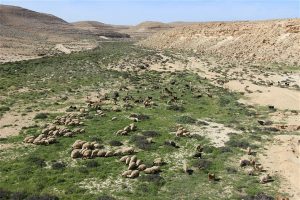
Bedouin herders with their flocks nearby Ramat Matred, the Negev rock art site where IMPART researchers conducted archaeology fieldwork.

Skin Research Institute & Research Services Unit
Researchers
LTER – ISRAEL
JOURNAL
Give us a “Like” on Facebook!
Facebook-f Envelope Twitter

Terms And Conditions

Who we are

  • About
  • Study Fields
  • Our Branches
  • Administrative & operational staff

Our Partners 

Scroll to top

Past research in the branch

Geology, hydrology and sinkholes:


  • The development of sinkholes and the detection of the early stages of sinkhole formation have been continuously studied for many years.
  • The mechanism of Dead Sea sinkhole formation was investigated and characterized. It was concluded that the retreating seawater level and the contact point between fresh and salt water dictate the formation of sinkholes.
  • Various characteristics of flash floods in streams flowing into the Dead Sea have also been investigated, along with their impact on the stream’s environment, infrastructure, formation of sinkholes and incision near their base level – the Dead Sea.
  • Improving an advanced model for real-time prediction of flooding using rain radar data.
  • Modelling and assessing the stability of rocks on the slopes of the Dead Sea cliffs, at points where rockfalls pose a risk to Route 90.

These research and development projects were led by Mr. Eli Raz and Dr. Carmit Ish-Shalom.


Tourism


This field aims to promote and develop local and regional tourism and especially with an emphasis on establishing a ‘tourism route’ along Route 90. Road tourism is gaining momentum worldwide; often a central focus point is strengthened by visiting points of interest along the way. These points may be of natural, cultural or historical value, or be for entertainment or leisure, or offer food or accommodation.

This field of research and development was led by Dr. Elad Almog.

Community outreach and education

Education and community outreach are among the key pillars that define the Dead Sea and Arava Science Center. The Dead Sea and Arava Science Center and its employees are deeply commitment to being involved in the local community and feel greatly privileged to be a part of the community and to share their knowledge with fellow residents. Dead Sea Branch employees reside in the region and are an important component of the local community. The researchers and staff develop, lead and implement diverse educational programs, encompassing the entire local population, from young to old and everything in between. These activities include teaching in elementary and high schools, leading scientific excellence groups, mentoring high school students in research dissertations, teaching extra-curricular science classes aimed to develop critical thinking, formulate research questions and more. The team provides bite-size science programs to inspire the constructive curiosity of preschool children as well. The branch’s scientists conduct experiential and enriching activity sessions at schools, outdoors, and in the research laboratories. All residents are invited to enjoy fascinating science lectures on a variety of topics and participate in activities on science days and fairs. In addition, students from Israel and abroad are welcome to visit the research laboratories and take part in the extensive activities offered. The educational activities are designed and managed in close cooperation with the education and culture departments of the region’s councils, and with the principals and teachers of the local schools.

Education Coordinator: Mr. Moshe Itach; moshe@adssc.org

Staff: All branch employees

Conservation and monitoring nature

Research topics:

Potential invasion of alien species from Arad to the region’s ephemeral streambeds

The city of Arad is located near the sources of several ephemeral streams that drain into the Dead Sea. Like in many other cities, non-native plants have been planted in Arad and may spread out of the city; in this case, they may invade the Dead Sea area. To assess the risk of invasion of alien species from Arad to the Dead Sea, an extensive survey of foreign plants with invasion potential is being conducted in the streams around Arad, and actions are taken to locate the sources of invasion in urban and private gardens within the city. This survey aims to identify which alien species planted in the city constitute a potential for invasion, and to assess the degree of risk of each species. These findings will help to formulate a sustainable landscaping plan for the city.


This study was conducted in collaboration with the Negev Mizrahi Environmental Unit and the Arad Municipality, and with funding from the Open Spaces Fund.


Research group:


Lead researcher: Michael Blecher


Staff: Irena Blecher

Archeology with a focus on the Dead Sea region

Research topics:

Research focuses on the Dead Sea region and particularly on the archeological study of Neve Ein Gedi (oasis). In previous decades (from 1980 onwards) systematic archeological surveys of Ein Gedi were conducted. An official archeological excavation is still ongoing in Neve Ein Gedi – exposing the ancient village from the Second Temple period. Every excavation season, more and more parts of the ancient settlement complex are exposed, including residential buildings, food preparation and storage rooms, courtyards, streets and more. Various tools for cooking, baking and processing materials have been found at the site, as well as coins, decorative elements, food scraps, and more.


In addition, the history of human activity and sailing in the Dead Sea is investigated. The declining sea level of the Dead Sea and the receding coastal soils, which until recently were submerged, are thoroughly surveyed to find evidence that may shed light on the history of human activity at sea. Over the years, various anchors from different periods were collected and identified, indicating periods in which they were used to sail across the Dead Sea, and the technologies that were used at that time.


Research group:

Lead researcher: Dr. Gideon Hadas


Staff: Volunteers during the excavation season


Link to excavation site

Remote sensing

Research topics:

Research of desert areas is made challenging by the limited access to extensive desert areas and the high spatio-temporal diversity that characterizes the desert. Satellite imagery methods can overcome these challenges and facilitate research. By using satellite imagery taken from various sensors, researchers acquire information about vast expanses, with high temporal and spatial resolution and without having to physically reach any point of interest within the studied area. The research team specializes in developing remote sensing methods specified to the desert environment, and processing local information. Many of the research projects combine hydrology and remote sensing technologies.


Areas of expertise and ongoing projects:

  • Extracting flood data in arid areas using the plant component in satellite imagery
  • Characterization of the spectral response of desert plants to water supply
  • Mapping and monitoring floods in arid areas using satellite imagery
  • Remote sensing and ecology of trees in arid areas

Research group:

Lead researcher: Dr. Sivan Isaacson


The team:

Yosef Avrahami; yosef@adssc.org

Technician – remote sensing


Gal Kagan; gal@adssc.org

Technician – GIS

The Skin Research Institute

Research topics:

The Skin Research Institute, which is part of the Dead Sea Branch of DSASC, leads applied research and innovative product development for the improved health and function of human skin. Areas of research and development combine cosmetics, dermatology and medicine. The institute’s researchers have extensive experience working with the natural resources unique to the Dead Sea and desert environment, i.e., minerals found in water, soil and air, atmospheric conditions (radiation, oxygen pressure), and endemic medicinal plants.

The flora and fauna of the Dead Sea region are often studied as they have developed special mechanisms for coping with the threats and stressors that are constantly exerted on them by the extreme environment. These stressors include a salt-saturated environment, the very hot and dry climate, scarce fresh water, high ultraviolet radiation and various pests.

The institute’s researchers define skin as the outer surface area of any body, hence research is extended to includes not only human skin but also the skin (or fur) of various animals, the outer microbial coating of desert plants (leaves for instance) and the upper layer of waterbodies such as the Dead Sea itself and the sinkholes that have formed at its shores.

Many studies conducted at the Skin Research Institute and the Dead Sea Branch strive to understand the coping mechanisms of organisms in nature for the benefit of humans. For example, DNA protection and repair mechanisms in halophilic bacteria, and microbial biofilm that forms around the leaves of acacia trees and provides protection from intense solar radiation.

Combining knowledge with innovation – collaborations between scientists developing skin models and microbiologists. Research to examine the feasibility of producing dermatological substances based on bacteria from the environment. In this study, microbiology is applied to experiments using the human skin model.

Areas of expertise and ongoing research:

  • Investigating the effect of nutrition on skin function;
  • Locating, isolating and developing natural materials to treat dermatological problems;
  • Investigating the skin’s natural defense mechanisms against ultraviolet radiation;
  • Development of unique and innovative models for research based on living human skin tissues (donated from plastic surgery) on three-dimensional structures of artificial skin and isolated skin cells. These models enable to assess the effect of unknown active ingredients on the skin in a wide range of parameters, such as tissue viability assessment, toxicity threshold, easing inflammation, wound healing, skin irritation, oxidants and antioxidants, sun protection, anti-aging, skin permeability, elasticity healing and more;
  • Development of alternatives to experimenting on animal;
  • Development of new molecules for dermatological treatments;
  • Development and establishment of laboratory models based on human tissues for studying burn processes, wounds and treatment;
  • Discovery of desert and marine plants with beneficial cosmetic or medicinal potential, developing methods for preparing extracts from all parts of the plant, testing the extracts using the various research models to prove the properties of the plants and how they affect the skin. The profound study of herbs, from the basic assessments to the commercialization of products, requires extensive collaborations with scientists specializing in areas such as chemistry, agriculture, botany, business and manufacturing;
  • Examining the effects of the environment (air pollution, radiation, etc.) and metabolic strains on the skin;
  • Examining the efficacy and safety of dermo-cosmetic substances and preparations;
  • Absorption of substances through skin tissues, artificial membranes or other medium;
  • Examining the effect of active ingredients that protect against skin cancer – inhibiting growth, preventing metastasis growth, invasion to the body’s cells and cell adhesion;
  • Research and development of cannabis-based products (under the Medical Cannabis Unit of the Ministry of Health).

The Skin Research Institute and its researchers are well equipped with state-of-the-art facilities for working with cell cultures, bacteria, viruses and fungal cells on petri dishes, with human or animal tissue cultures, reconstructed skin systems and more. They have advanced spectrophotometers, plate readers, and UHPLC for biochemical, biological and chemical analyses, a unique SPF / UVAPF device to test the sun-screening capacity of preparations, extracts and fabrics, advanced microscopy including fluorescence, fluorescence-activated cell sorting (FACS) live cell imaging, and equipment for histology. In addition, UVA, UVB, UVC and IR lamps for studying the effects of solar radiation and protective materials on cultures and tissues are available.

To prepare active ingredients and formulae for research, from plant extracts to final products, the institute’s laboratories are equipped with an innovative system for the parallel production of extracts under different conditions and solvents (ASE350), evaporators, blenders, drying ovens, radiation spectrum meters (natural or artificial) and more.


The institute provides research services for skin health and product development to cosmetics and pharmaceutical industries:

The Skin Research Institute provides research and experimental services for a cost. It also manages diverse collaborations: sale of preclinical research services to cosmetic, dermatology and medical start-ups, based on the extensive knowledge and experience of the staff, using the unique experimental models developed on site, and relying on a very wide range of advanced equipment and world-class technological capabilities. The research team has experience advising and building experimental setups customized for each client’s requirements. The research team is accustomed to leading experiments designed to be presented to relevant regulatory bodies, for patent registration or for business development, and has raised significant funds from investors. The research support team is committed to providing customer service, trial and reporting protocols, accuracy, reliability, discretion and tight schedules. Each research project is led by a PhD level researcher who maintains direct contact with the client. If required, the researchers of the institute consult with associated professional experts, who can provide great added value where needed.


Feel free to contact us for further questions or requests.


Research group:


Leading researcher: Dr. Navit Ogen-Stern


Chief Scientist, Research Services: Dr. Guy Cohen


Operations and business manager: Oren Raz


 The team:

Raanan Gvirtz; raanan@adssc.org

PhD candidate – supervisors: Dr. Guy Cohen and Dr. Aryeh Grossman (Bar Ilan University)


Noy Eretz Kdosha; noy@adssc.org

Biology student, research assistant for the pharmaceutical and cosmetic industries

Current research: Drug development using substances that counteract the effects of the environment on the skin


Margarita Yarmanko; margarita@adssc.org

Engineering student, research assistant for the pharmaceutical and cosmetic industries

Research area: Development of skincare products

Clinical studies in Dead Sea climatotherapy

Research topics:

The medicinal properties inherent in the Dead Sea and its surroundings are well-known to mankind and have been extensively researched throughout history. The main factors that are distinctive to the Dead Sea area and benefit humans are the unique solar radiation spectrum (since the Dead Sea is the farthest place from the sun on earth), high partial pressure of oxygen in the air and the particularly high concentrations of essential minerals in the water, soil (mud), and air. Many comprehensive clinical trials, conducted over many years on a diverse populations of patients with autoimmune skin diseases such as psoriasis, atopic dermatitis, vitiligo and others, have examined the effects of controlled exposure to sunlight and environmental conditions, and being near the Dead Sea. The effects are tested both by monitoring the medical condition before and after a series of treatments, as well as after a longer time span and by quantifying laboratory-level metrics such as a gene expression and changes in the immune system as seen in the blood. Publications from these studies has proven the effectiveness of Dead Sea phototherapy treatments for dramatically reducing the extent and severity of psoriasis lesions over many months without any medications.

To accurately characterize the unparalleled parameters of the Dead Sea environment, and to improve and refine the phototherapy-based treatment programs, biometeorological data are collected in the Dead Sea environment, including UVA and UVB wavelengths, aerosol monitoring, and radiation data, and are compared to other unique regions. The global UVB radiation composition and the ratio between direct and diffuse radiation are studied, and the feasibility of applying the Dead Sea photoclimatotherapy treatment results is investigated.


Research group:

Leading researcher: Dr. (MD) Marco Harari

Staff: Dr. Avraham Kodish

Microbiology

Research topics:

The microbiology research group focuses its efforts on understanding the physiology and interactions between microorganisms in extreme environmental conditions such as the Dead Sea. The researchers study communities of unique bacteria found in water, soil and plants of arid regions, in attempt to locate and identify bacterial populations that express genes with interesting metabolic activity that may potentially be harnessed for the benefit of mankind and the environment.

In addition, the group is developing microbiological engineering systems designed to improve various processes in a variety of fields, such as: wastewater treatment methods, biofilm development for environments such as the ocean, production of cosmetic products, oral and dental health solutions and more. The preliminary results have shown potential for wide-ranging applications. Collaborations in the field of agriculture are expected to expand.

Another fascinating and challenging research topic is “NewSpace”, a term that emphasizes that space is becoming accessible to more people than ever. More people are expected to work and live in space, in increasing numbers as time progresses, thanks to significantly lower launch costs and new space technologies. The objective of our current project is to support humans living and working in space, especially those in outposts and planetary bases. For the first time ever, in a project currently underway, a unique Space Multi-Species Photobioreactor (SMS-PBR] has been designed, developed and built to enable the utilization of spent rocket fuel, CO2 and other waste products to produce breathable oxygen and other nutrients. Scientists of the Dead Sea and Arava Science Center are collaborating on this project with Bar-Ilan University, Afeka College and VTS energy Ltd. The SMS-PBR facility will remotely monitor the growth of organisms such as algae, bacteria and even fish. Currently, researchers are studying the toxic space fuel (hydrazine) as a possible nutritional source for bacteria and algae adapted to thrive in extreme conditions. The project includes the detection and development of strains that will be grown in SMS-PBR together with the development of a suitable photobioreactor cell. Researchers are striving to significantly improve waste utilization, the safety and health of staff, and implement efficient resource use while reducing space mission costs. This study was funded by the Israel Space Agency and the Ministry of Science and Technology, Israel. Collaborations are welcome.

Research group:

Leading researcher: Dr. Ashraf Al-Ashhab

The team:

B.Sc. Ibrahim Sharabati (lab Manager)

B.Sc. Kareem Nayrouck (lab technician)

Microbiology and Next Generation Sequencing (NGS) of bacterial communities 


Ecology of the Dead Sea

Get the coolest tips and tricks today

Research topics:

  • Functional ecology and functional biogeography of plants, focusing on adaptation strategies to extreme environments.
  • Characterization of the morphological and anatomical features and phenomena that contribute to the adaptation of plants to their environment, focusing on the accumulation of silicon and other inorganic substances in plant. The environmental factors that affect this phenomenon and its implications for the plant and the ecosystem are also studied.
  • Silicon accumulation as an adaptation to aridity and as an antiherbivory defence.
  • Research on the evolutionary history of plants and the evolutionary history of plant-animal relations.

Ecological research:

  • Biogeography of the accumulation of silicon in Israeli plants and its effects on ecosystem functioning (funded by the Israeli Science Foundation; in collaboration with Prof. Marcelo Sternberg, Tel Aviv University)
  • Accumulation of silicon and other elements in parasitic plants and how it is affected by the surrogate plants
  • Allometry of ecosystems in the desert region of Israel (jointly funded by ICA in Israel, Tamar Regional Council and Tel Aviv University; in collaboration with Prof. Shai Meiri, Tel Aviv University)
  • Biogeography of thorny plants of Israel (in collaboration with Prof. Simcha Lev-Yadun, University of Haifa)
  • Biogeography of fruits and seeds in plants of China (in collaboration with Prof. Shunli Yu, Chinese Academy of Sciences)

Ecological monitoring:

  • Monitoring the impacts of the Nahal Tselim alluvial fan rehabilitation on animal and plant habitats (ICL Dead Sea Works)
  • Ecological monitoring of Nahal Ashalim (HaMaarag)
  •  

Research group:

Lead researcher: Dr. Ofir Katz

The team:

Tuval’e Solomon

Research associate and laboratory manager

Yaron Nitka-Nakash

Field technician

Niv Morali

Master’s degree student – Ecology and subsistence economy in Neolithic Uvda Valley

Jinyu Ouyang (located in Germany)

PhD student – The Ecological Role of Silicon in Semi-Arid Rangelands

Irena Blecher

Taxonomy

Former team members:

Yamit Marom – laboratory manager

Gideon Kedem – field and laboratory technician

Hanania Forest – Master’s student

Dr. Renan F. Moura – postdoctoral fellow

Hydrology of desert water and the Dead Sea Basin

Research topics:

Our research focuses on the characterization of stream hydrodynamics and sediment and suspended particle fluxes during flooding of ephemeral streams in arid and semi-arid climates. Although stream sediment transport processes are of great scientific, engineering and environmental importance, very little is known regarding the effect of flash floods with irregular flow patterns on these sediments. Flooding streams in agricultural and inhabited areas, blockages of water reservoirs, transport routes and dams, and the stability of structures within and around flow channels (e.g. collapse of bridges and dams due to flooding) are of particular interest. To learn more, we examine the effects of flow characteristics on particle transport processes. Data for these projects is collected using advanced equipment and methods including geophone, hydrophone, radar speed gun, Large-Scale Particle Image Velocimetry (LSPIV) and three-way velocimeter for high-resolution quantification of flow characteristics, and sediment and suspended particle fluxes.

As part of the study, an innovative method was developed to calibrate the sediment trap data (to monitor particulate fluxes), based on the change in cumulative sediment mass, and not as generally measured according to fixed time intervals. This method reduces background noises during low flow and prevents masking of true data during high flow events. It therefore more accurately represents the temporal changes of sediment fluxes.

Current projects:

·        Characterization of hydrodynamics and sediment fluxes in flood surges;

·        Using the LSPIV method to determine flow rates in flooding streams;

·        The hydrology of the Tze’elim Basin: flow rates, application of an existing hydrological model of the area and working with ICL Dead Sea Works to develop a new flood warning system;

·        How the construction of the Dead Sea water pipeline to the ICL plant pools affects the Nahal Tze’elim alluvial fan;

·        Live broadcast of flash floods.

The Desert Floods Research Center conducts additional research on hydrology and floods in the desert, and continuously collects data.

Research group:

Lead researcher: Dr. Eran Halafi

The team:

Yaron Nitka-Nakash; yaron@adssc.org

Research technician; hydrology; Dead Sea Branch 


Projects: Flood monitoring, data management, gathering of information regarding hydrology-infrastructure in the Dead Sea, fieldwork focusing on erosional processes in Nahal David and Kedem, fieldwork in Nahal Ashalim, fieldwork in research and development of flood monitoring methods using remote sensing methodologies.